
Training on Research Ethics and Integrity Capacity Strengthening
Two members of staff from University of Kabianga, Prof. Phanice Wangila and Prof. Issa Mwamzandi, attended the Research Ethics and Integrity Capacity Strengthening training organized by NACOSTI at the Lake Naivasha Resort.
The five-day training brought together over two hundred participants drawn from Universities, technical and vocational colleges as well as other tertiary institutions. The training sought to deepen the understanding of participants on ethical and responsible research practice.
The training opened with welcoming remarks from Mr. Gideon Kirui, Director of Corporate Services at the National Commission for Science, Technology and Innovation (NACOSTI), followed by official opening remarks from Prof. Vasey Mwaja, Chairman of NACOSTI.
Sessions explored the foundations and practice of research ethics and integrity, including national and international research ethics governance, the philosophy and evolution of research ethics, and the prevention and management of research misconduct. Participants also examined ethical principles, informed consent, research involving vulnerable populations and animals, and the review of research proposals and protocols.
The programme highlighted the responsibilities researchers have throughout the research process—from designing sound and ethical studies to engaging meaningfully with communities. Discussions also addressed changing research priorities and funding, ethics dumping, open science, research security, and the ethical implications of emerging technologies. Case studies and panel discussions provided opportunities to consider how these issues arise in real research situations.
Key Outcomes of the Training
The training strengthened our capacity to conduct and support ethical, responsible, and high-quality research. Key outcomes included:
- Improved understanding of research ethics and integrity, including their development, core principles, and importance throughout the research process.
- Greater familiarity with research ethics governance at national and international levels, including the roles of relevant institutions and review bodies.
- Enhanced knowledge of research misconduct, its forms, and the responsibilities of researchers in preventing and addressing them.
- Stronger understanding of informed consent and participant protection, particularly when research involves vulnerable populations.
- Increased awareness of ethical protocol review, including the importance of sound research design and methodological responsibility.
- Recognition of the value of meaningful community engagement in planning and conducting research.
- Better awareness of emerging and cross-cutting issues, including ethics dumping, open science, research security, changing funding priorities, and the ethical use of new technologies.
- Greater preparedness to consider ethical issues in research involving animals and to apply appropriate safeguards.
- Practical insight through case studies and discussion, supporting the application of ethical principles to real research situations.
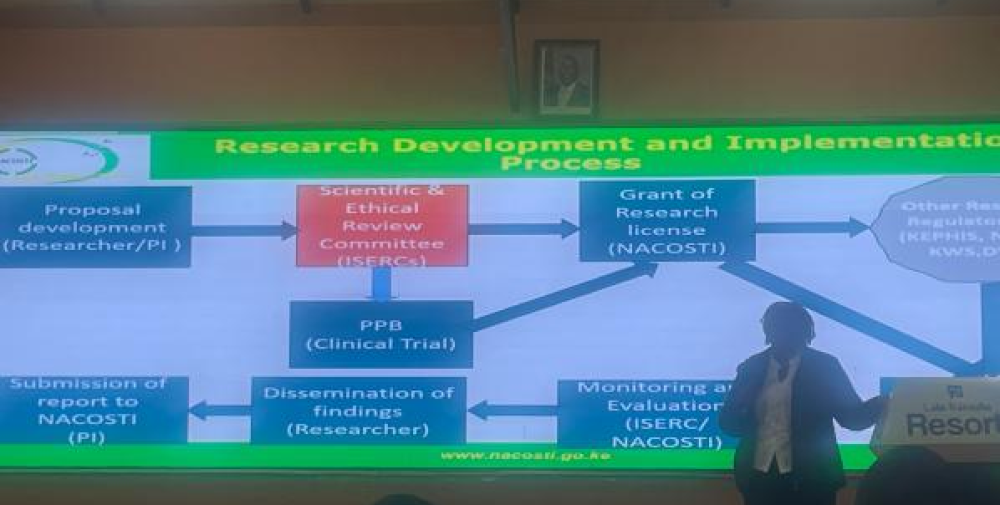
- Institutions that did not have Institutional Scientific and Ethics Review Committees (ISREC) were strongly advised to have them in place in their institutions/ University of Kabianga has had one for the past 6 years now.
Overall, the training provided knowledge and perspectives that can be applied to strengthen ethical research practice and promote a culture of integrity within the university and research community.