
University of Kabianga Showcases Research Excellence at Regional STI Conference in Kigali, Rwanda
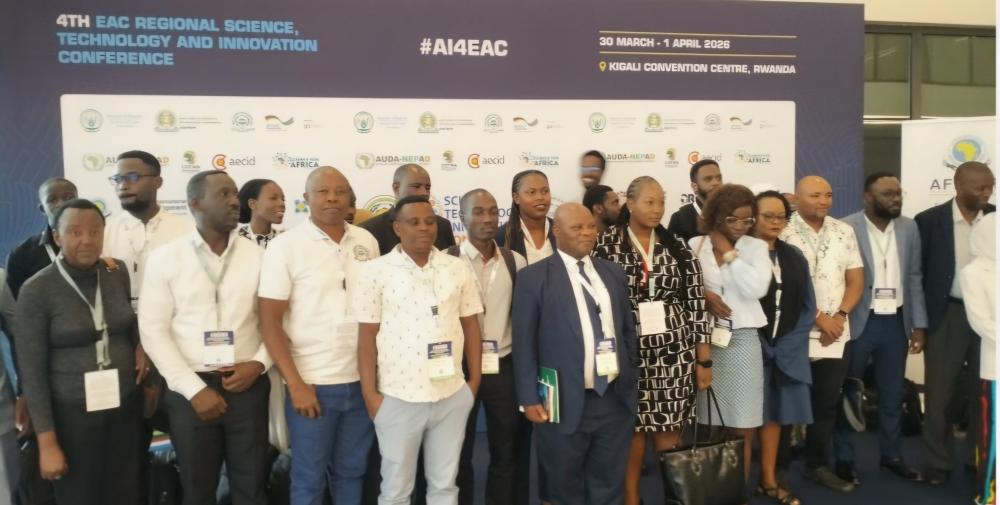
The University of Kabianga proudly marked a significant regional academic milestone through its participation in the 4th Regional Science, Technology and Innovation (STI) Conference held from 30th March to 1st April, 2026 at the Kigali Convention Centre, Rwanda. The University was ably represented by Dr. David Ngatia and Dr. Florence Kamonjo who joined distinguished scholars, policymakers, innovators and researchers from across East Africa and beyond in advancing critical conversations on the future of science, technology, innovation and Artificial Intelligence (AI) in the region.
Held under the theme, “Harnessing Artificial Intelligence for a Resilient, Inclusive and Innovative East Africa,” the conference provided a strategic platform for dialogue on how AI can drive sustainable development, educational transformation, regional competitiveness and inclusive innovation. As part of the conference programme, the two University of Kabianga scholars presented research papers that addressed timely and impactful issues in higher education and AI integration:
“Strategies for Developing a Contextualised AI Literacy Framework for Teacher Educators in Kenyan Universities” - presented by Dr. David Ngatia.
“Artificial Intelligence in Academic Practice: Patterns of Use and Student Perceptions in Kenyan Universities” - presented by Dr. Florence Kamonjo.
These presentations highlighted the University’s growing contribution to research on AI in education, particularly in shaping context-sensitive, inclusive and practical approaches for teaching, learning and academic engagement in African higher education institutions.
Throughout the three-day conference, participants engaged in high-level keynote presentations, policy dialogues, side events, innovation showcases, paper presentation sessions and networking forums. Notable discussions focused on responsible AI adoption, open science, science diplomacy, AI governance, skills development, research excellence, youth and women-led innovation and regional policy coordination. The conference also brought together key regional and international stakeholders, including government leaders, academic institutions, innovation agencies, development partners and research organizations, thereby offering valuable opportunities for collaboration and knowledge exchange.
For the University of Kabianga, participation in this important regional conference reflects its continued commitment to: Advancing research excellence, promoting innovation in higher education, strengthening regional and international academic collaborations and contributing to policy and scholarly discourse on emerging technologies in education and society. The insights, networks and resolutions emerging from the conference are expected to enrich the University’s ongoing work in research, teaching, innovation and community engagement.
As the discourse on AI continues to shape the future of education and development in Africa, the University of Kabianga remains firmly positioned as a contributor to transformative scholarship and regional thought leadership.